MARK IV BALL ROUND

MARK IV BALL ROUND
Manufactured April 1910 (4-10) by ( S) Indian Government Ammunition Factory Kirkee, Southern Circuit, INDIA expended at Salaita hill.

POST OFFICE

Egypt is the most popular tourist destination in Africa. In 2007, Egypt attracted around 10 million visitors. The Pyramids have been a prime tourist attraction for the past 2000 years, but did you know Sudan has more Pyramids than Egypt ! The 223 pyramids are smaller and steeper than their Egyptian counter parts, but the Nubians were obviously very busy people around 4 BC - 3 AD LEARN MORE and get daily up dates.

Thursday, 6 September 2012

FORT JESUS


Fort J

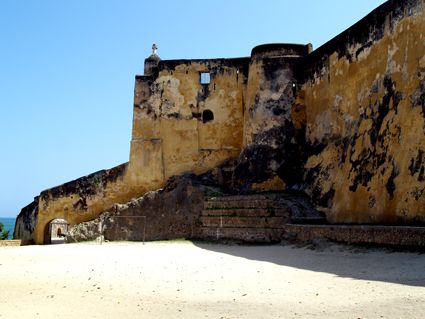
Fort Jesus is a Portuguese fort built in 1593 by order of King Philip I of Portugal
(King Philip II of Spain), then ruler of the joint Portuguese and Spanish Kingdoms,
located on Mombasa Island to guard the Old Port of Mombasa, Kenya. It was built
in the shape of a man (viewed from the air), and was given the name of Jesus. In
2011 the fort was declared a World Heritage Site by UNESCO, highlighted
as one of the most outstanding and well preserved examples of 16th century
Portuguese military fortifications
Between 1631 and 1875 the fort was won and lost nine times by the nations contesting control of Mombasa. It was declared a historical monument in 1958. Today it houses a museum.
The fort was designed by a Milanese  architect, Giovanni Battista Cairati, who was the Chief Architect for Portuguese possessions in the East. It was the first European-style fort constructed outside of Europe designed to resist cannon fire. Today, it is one of the finest examples of 16th century Portuguese military architecture, which has been influenced and changed by both the Omani Arabs and the British. The fort quickly became a vital possession for anyone with the intention of controlling Mombasa Island or the surrounding areas of trade. When the British colonised Kenya, they used it as a prison, until 1958, when they converted it into a historical monument. James Kirkman was then assigned to excavate the monument, which he did (with a large use of external historical documents) from 1958 to 1971.
The architecture of the fort represents the rough outline of a person lying on their back, with the head towards the sea. The height of the walls is 18 meters. The original Portuguese fort had a height of 15 meters, but the much taller Oman Arabs added 3 meters upon capturing the fort.
The fort combines Portuguese, Arab and British elements, representing the major powers that held it at different times in history. Portuguese and British presence if felt by the presence of their respective cannons. The Portuguese cannons had a range of 200 meters and are longer than the British cannons which had a range of 300 meters. Oman Arabs marked their occupancy with numerous Koran inscriptions into the wooden door posts and ceiling beams. The Muslim tradition of 5 pillars is also portrayed throughout the fort, with a former meeting hall supported by 5 stone pillars to the ceiling.
Some of the historical structures still standing in the fort include Oman House, which was the house for Sultan who governed the East African coast. Others are an open water cistern by the Portuguese for harvesting rain water, and a 76-foot deep well sank by the Arabs, but whose water was too salty to be used for anything but washing.

Wednesday, 8 August 2012

THE STORY OF THE AFRICAN QUEEN - MV LIEMBA.


                                                                                   MV Liemba
If ships could talk then the MV Liemba would tell a story like no other. It has probably seen all faces the world would assume bloody war, hope and peace in a life time that spans several decades. It was earlier known as the Graf von Götzen. Mv Liemba was buit in 1913 at the Meyer- Werft Shipyard in Papenburg Germany. It was named after the former Governor of German East Africa, Count Gustav Adolf Graf von Gotzen. She was to serve as a passenger and cargo ferry in conjunction with the East African Railway company. She was fully assembled in 19 14 at Kigoma on Lake Tanganyika and was operational by 1915.
The Germans fully dominated lake with the aid of the Gotzen, it was additionally armed with a 105 mm (4.1 in) autocannon. Other than ferrying cargo and personnel the ship acted as a base to launch ambush attacks on the enemy and allied forces.

                                  German gun crew manning Graf Goetzen's 105mm autocannon
The British under the command of Geoffrey Spicer-Simson and the Royal Navy brought two armed motor boats from England via Belgian Congo to the western shore of Lake Tanganyika. The two boats waited until Dec 1915, then mounted surprise attacks on the Germans, capturing their gun boat – Kingani and Hedwig von Wissman was sunk on February 1916, leaving the Gotzen as the only German vessel remaining on the Lake.
With strengthened positions on the Lake, the British and allied forces, (Belgians) bombed German positions in and around Kigoma. The Belgians set up an airbase at the western shores of the Lake and claim to have hit the Gotzen a claim that the Germans denied. The German spirit suffered and consequently striped of her gun. Kigoma was quickly being cut-off by the allied forces having cut-off the railway link in July 1916. The German naval commander Gustav Zimmer ordered the Gotzen to be dismantled to avoid it falling on enemy hands. This was to be done by three engineers’ who had travelled from Germany to assemble the ship. They saw the possibility of salvaging the ship in future and they loaded the ship with sand and covered all engines with a thick layer of grease before sinking her carefully on 26th July off the mouth of the Malagarasi River.
The Gotzen would stay submerged at the bottom of Lake Tanganyika until 1924 when the British Royal Navy salvaged her to aid transport in the lake at their new protectorate of Tanganyika. They found the engines and boilers were still usable and she returned to service in May 1927 as a passenger and cargo ferry under the new title MV Liemba. The Liemba would operate full time and non-stop from that date.
In 1997 the UNHCR used Liemba to transport more than 75,000 refugees, who had fled Zaire during the First Congo War ,back to their homeland following the overthrow of long time dictator Mobutu Sese Seko.
So the next time you visit this Magical land make a date with history  have a glance or a ride on the MV Liemba.


Sunday, 15 July 2012

Lake Tanganyika


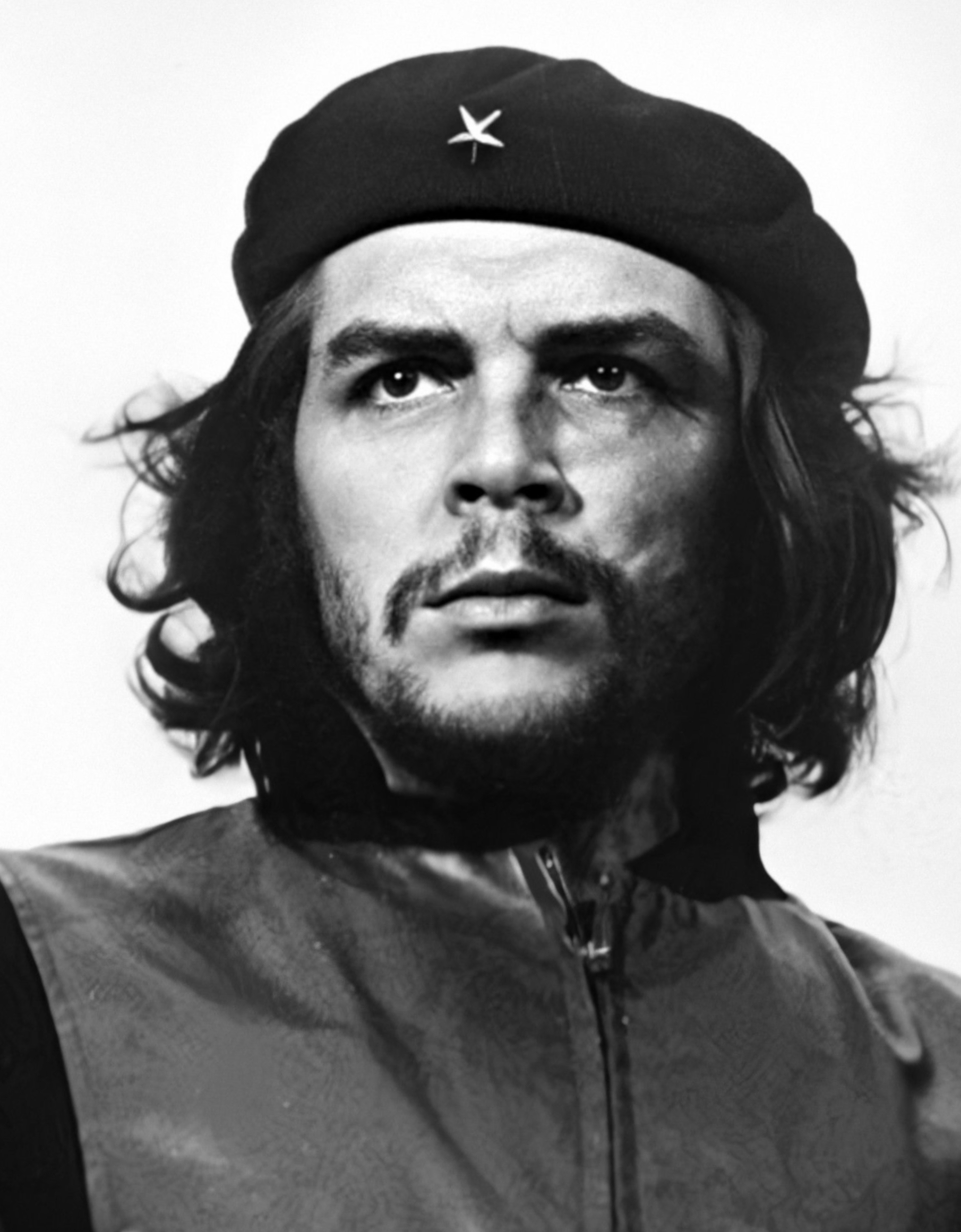
Argentinian revolutionary Che Guevara in 1965 used the western shores of Lake Tanganyika as a training camp for guerrilla forces in the Congo. From his camp, Che and his forces attempted to overthrow the government, but ended up pulling out in less than a year since the National Security Agency (NSA) had been monitoring him the entire time and aided government forces in ambushing his guerrillas.
The Lake was the scene of two famous battles during World War One.
The first known Westerners to find the lake were the Great British explorers Richard Burton and John Speke, in 1858. They located it while searching for the source of the River Nile. Speke continued and found the actual source, Lake Victoria. Later David Livingstone passed by the lake. He noted the name "Liemba" for its southern part, a word probably from the Fipa language which in 1927 was chosen as name for the conquered German ship which is serving the lake up to the present time.

Saturday, 30 June 2012

GERMAN POST OFFICE

German nationals Clement Denhardt and G. A. Fisher first made contact with the Lamu hinterland in the late 1870s. They became friends to the Sultan of witu, Ahmed Abdullah Simba, who at the time was having trouble with the rulers of Lamu and Zanzibar. Witu became a German protectorate.They built a building that was the first German Post Office ever established along the East African coast in November 22nd 1888 by the Germans, led by Clement Denhardt. The communications and trade contacts for the German Protectorate in Witu could at the time be served through Lamu, which was a well established town with links to the outside world.The Post office operated for more than two years before its closure on March 3rd 1891 after the withdrawal of the German settlement in Witu.German Post Office now a Museum is located in Lamu old town, Lamu district in Coast Province Kenya.

Sunday, 24 June 2012

WW1 BALL ROUND

Manufactured April 1910 (4-10) by ( S) Indian Government Ammunition Factory Kirkee, Southern Circuit, INDIA expended at Salaita hill,most likely fired from an SMLE rifle learn more about the battle of Salaita hill

BATTLE OF SALAITA HILL

Monday, 18 June 2012

TSAVO RIVER BRIDGE

Logo of the then Uganda railways
                          In 1898 the British with the Indian and native railway constructors reached Tsavo River.They had to build a  permanent bridge to replace a temporary wooden trestle.Col J H Patterson was tasked to build the bridge..

                                                       Bridge construction

                                                         Tsavo River bridge inspection by Patterson

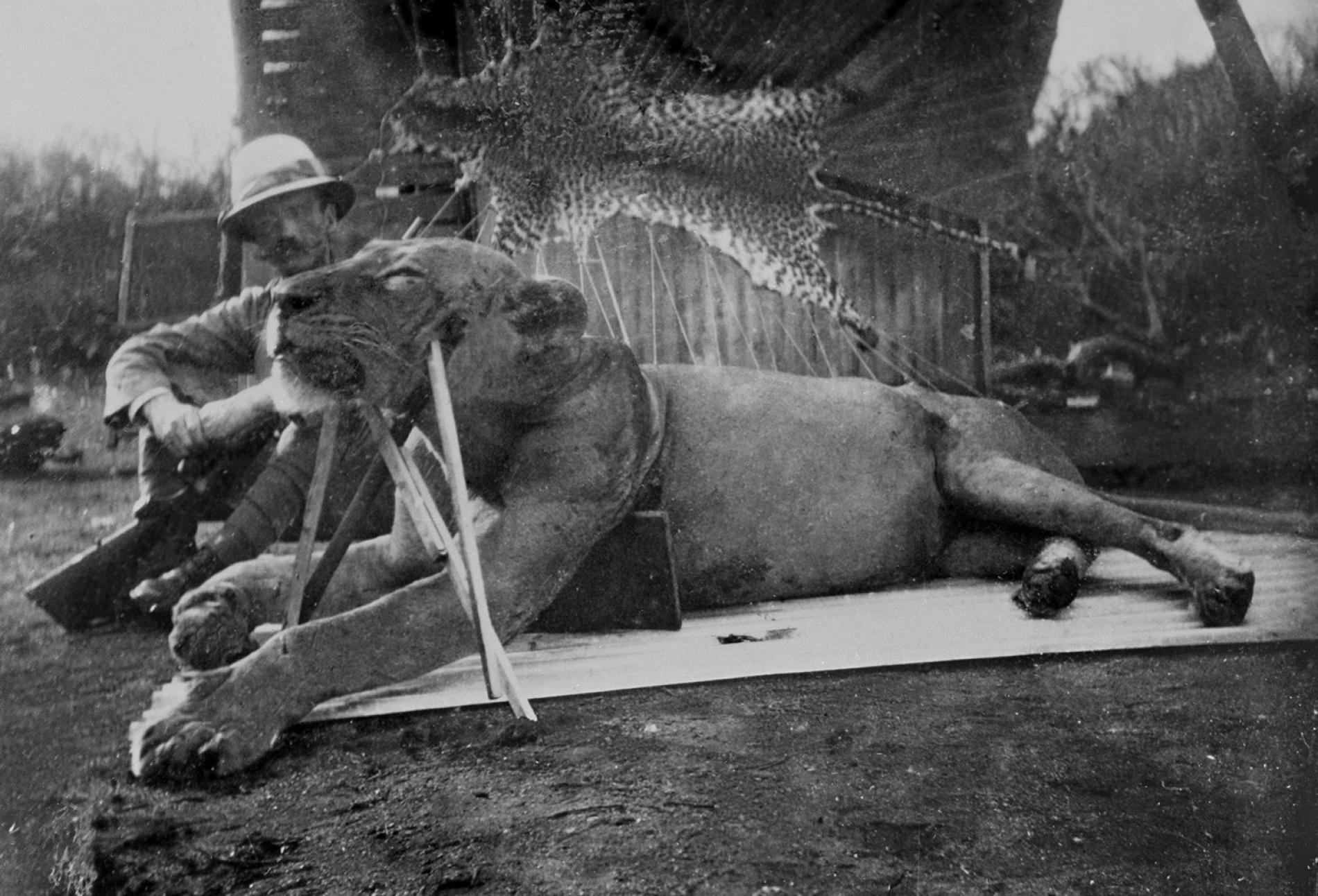
.....from then on unfolded a lion story like no other....An epic of terrible tragedies spread over a number of months.The construction was halted for several months after a scare, the scores laborers –Indian and African were mauled by two lions. The two felines were later shot by Patterson and their remains are currently preserved at the Chicago field Museum. The bridge the one below is still in place and functional. Patterson later wrote The Man-Eaters of Tsavo a non fiction published in 1919. The Germans would later during WW1 attempt to reach and destroy this bridge to halt the penetration of the British in East Africa..see more on HISTORY OF THE IRON LINE
                                              Col Patterson with the remains of the first man-eater to be shot
                                      Below is the Tsavo River bridge still functional 110 years later

Photo: 1898 the British and railway constructors reached Tsavo 
River.They had to build a permanent bridge to replace a temporary wooden
 trestle.Col J H Patterson was tasked to build the bridge......from then
 on unfolded a lion story like no other.An epic of terrible tragedies 
spread over a number of months.The construction was halted for several 
months after a scare, the scores laborers –Indian and African were 
mauled by two lions. The two felines were later shot by Patterson and 
their remains are currently preserved at the Chicago field Museum. The 
bridge the one below is still in place and functional. Patterson later 
wrote The Man-Eaters of Tsavo a non fiction published in 1919. The 
Germans would later during WW1 attempt to reach and destroy this bridge 
to halt the penetration of the British in East Africa..


Sunday, 13 May 2012

THE BATTLE OF LATEMA REATA HILL


MARCH 11 – 12, 1916 latema-Reata, Taveta,  Kenya

 “DO NOT BE AFRAID OF TRYING ANYTHING NINETY-NINE TIMES, IF THERE IS A CHANCE OF SUCCEEDING AT THE HUNDREDTH”
  
Many lessons, though costly were learnt at Eldorobo Salaita hill, the British knew why the assault failed and the Germans got to know the areas to improve on, the determination of their opponents and the cost should they have lost. The mountain was to be renamed slaughter, chilling enough to instil fear and be a reminder of difficult times.  But that done it was not enough to stop another attack under the same commands, similar terrain, same year in the month of March, the battle of LATEMA-REATA.
From his account in the book “MY REMINECENCES OF EASTAFRICA” Gen VON-Lettow writes of hostile spies. They were called “Shenzi” innocent looking locals. They were spying the Usambara railways and as a proof of having reached their objective they were to bring back to their masters part of Railway line. They deciphered the enemy was making a detailed reconnaissance of the Usambara railway and approaches to it. The usambara railway was the Germans principal line of communication. A look at a map showed that if the enemy advanced from Salaita and Longido enroute to new Moshi they stood the risk of losing Kilimanjaro country.
Due to anticipation of this assault, the Salaita position following its earlier successes was maintained but with a lesser force. German forces moved south to Latema-Reata hills. By March 8, 1916 the two major positions were manned by Major George Kraut who had earlier successfully defended Salaita hill. General Malleson of the British forces was faced with a new problem despite similarities in circumstances to the Salaita battle, two hills covered with dense vegetation that became worse as one ascended.
The first attack began on March 11, 11:45am. Brigadier Malleson flesh from defeat at salaita had at his disposal the 1st East Africa Brigade for the operation consisting of, Belfield’s Mounted scouts, Mounted infantry company, No’s 6 and 8 field batteries, no 184 Howitzer battery, 2nd Rhodesian Regiment, 3rd Kings African Rifles, 130th King Georges own Baluchis, a machine gun battery of the Loyal North Lancashires and volunteer machine gun company.
Malleson ordered his men on a frontal attack on Latema hill. A deception attack was not possible due to dense vegetation and a swamp on the south. The Rhodesian regiment was held in reserve while The Baluchis and 3rd Kings African Rifles went to attack holding the right and left positions respectively. The attack was supported by Artillery which bombarded German positions from arrange of 3,000 yards.
Major Kraut reported from Reata that hostile forces were moving towards his direction from Taveta. An attack was made by several thousands of men on the three German companies holding this position. The enemy suffered heavy losses and reported hundreds of stretchers were used to ferry the wounded and by evening the enemy attack had been repulsed with heavy losses. In the darkness captain kohl’s forces had pursued the enemy with energy and opened machine gun fire inflicting further casualties on their enemy when he tried to make a stop. After the attack failed, Malleson requested to be relieved from his command position due to sickness.
Gen Mallesons position was taken over by Brig. Gen Tighe who ordered a second assault. That night Krauts detachment telephoned again that the enemy had attacked with great force and penetrated his position. The Rhodesians and the Kings African Riffles were the leading units, the 130th Baluchus covering the right flank and the 9th and 5th Field batteries supporting the attack. Among the casualties was the commander of the Kings African Rifles, Lieutenant-Colonel B R Graham. Early in the morning of 12th Kraut found some of his detachment on their positions on Reata Mountains. The enemy had fallen back to Taveta.  Lots of confusion had occurred at night during the close quarter battles. Despite heavy losses on the German side the British had many casualties, and the wounded were moved without a hitch.
The British would make the third attack forcing the enemy to concede defeat, under Tighe’s command the 7th Southern Africa Regiments would attack at night with their Bayonets fixed. The south Africans’ managed to find their way up the two hills, in the darkness and confusion  Gen  Tighe lost control of the units and fearing heavy losses ordered a retreat at 0430Hrs. But when the patrols reached the heights of the hill to convey the order they found, Lieutenant-Colonel Freeth and Major Thompson at the summit and in command, the Germans were in a full retreat. The British consolidated this position to be their strong hold.