German nationals Clement Denhardt and G. A. Fisher first made contact
with the Lamu hinterland in the late 1870s. They became friends to the
Sultan of witu, Ahmed Abdullah Simba, who at the time was having trouble
with the rulers of Lamu and Zanzibar. Witu became a German
protectorate.They built a building that was the first German Post Office
ever established along the East African coast in November 22nd 1888 by the
Germans, led by Clement Denhardt. The communications and trade contacts
for the German Protectorate in Witu could at the time be served through
Lamu, which was a well established town with links to the outside
world.The Post office operated for more than two years before its
closure on March 3rd 1891 after the withdrawal of the German settlement
in Witu.German Post Office now a Museum is located in Lamu old town,
Lamu district in Coast Province Kenya.
MARK IV BALL ROUND

Manufactured April 1910 (4-10) by ( S) Indian Government Ammunition Factory Kirkee, Southern Circuit, INDIA expended at Salaita hill.
Saturday, 30 June 2012

Sunday, 24 June 2012
WW1 BALL ROUND

BATTLE OF SALAITA HILL
Monday, 18 June 2012
TSAVO RIVER BRIDGE

Logo of the then Uganda railways


.....from then on unfolded a lion story like no other....An epic of terrible tragedies spread over a number of months.The construction was halted for several months after a scare, the scores laborers –Indian and African were mauled by two lions. The two felines were later shot by Patterson and their remains are currently preserved at the Chicago field Museum. The bridge the one below is still in place and functional. Patterson later wrote The Man-Eaters of Tsavo a non fiction published in 1919. The Germans would later during WW1 attempt to reach and destroy this bridge to halt the penetration of the British in East Africa..see more on HISTORY OF THE IRON LINE
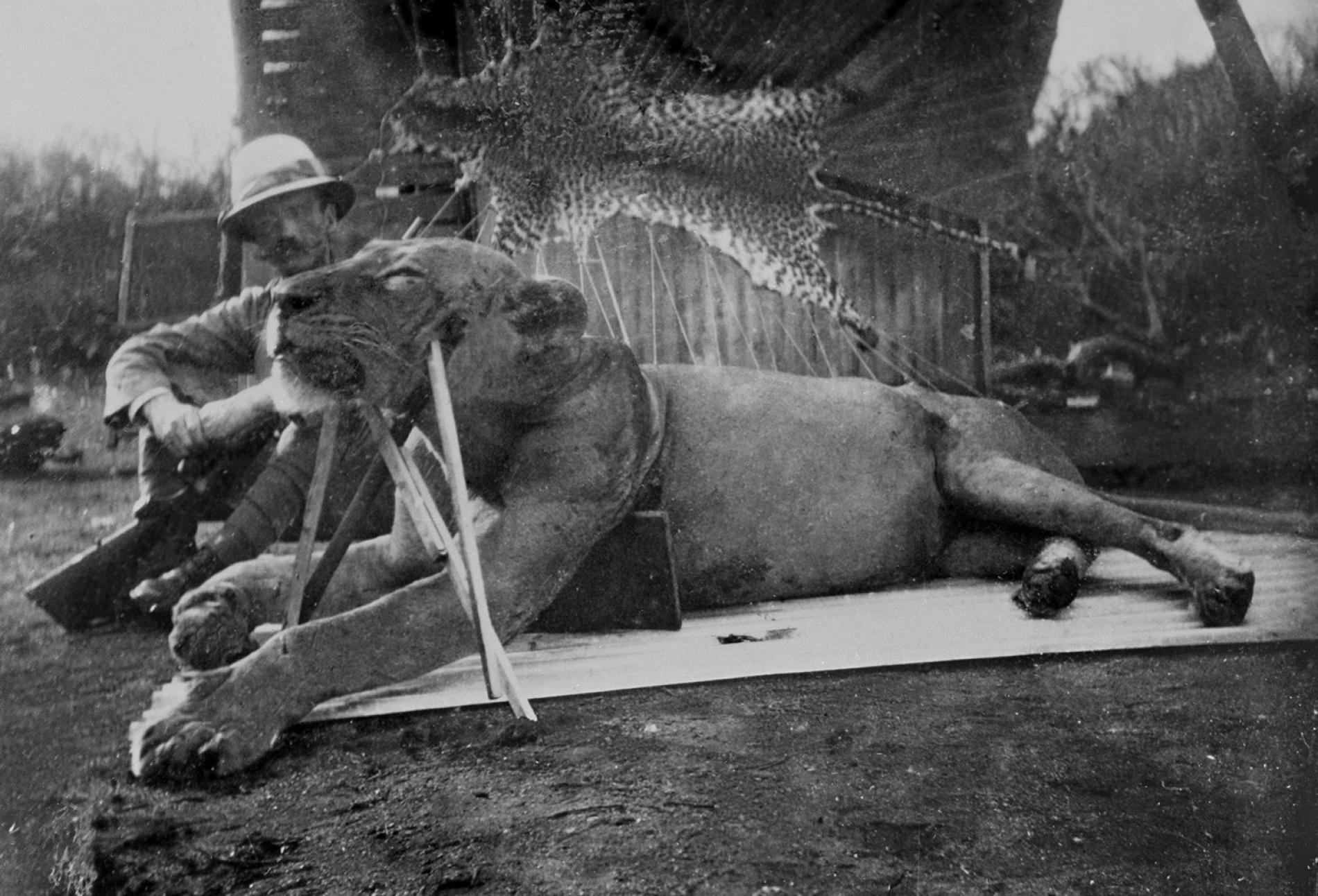
Col Patterson with the remains of the first man-eater to be shot
Below is the Tsavo River bridge still functional 110 years later


Sunday, 13 May 2012
THE BATTLE OF LATEMA REATA HILL
MARCH 11 – 12, 1916
latema-Reata, Taveta, Kenya
“DO NOT BE AFRAID OF TRYING ANYTHING NINETY-NINE
TIMES, IF THERE IS A CHANCE OF SUCCEEDING AT THE HUNDREDTH”
Many lessons, though costly were learnt at Eldorobo Salaita
hill, the British knew why the assault failed and the Germans got to know the
areas to improve on, the determination of their opponents and the cost should
they have lost. The mountain was to be renamed slaughter, chilling enough to
instil fear and be a reminder of difficult times. But that done it was not enough to stop another
attack under the same commands, similar terrain, same year in the month of March,
the battle of LATEMA-REATA.
From his account in the book “MY REMINECENCES OF EASTAFRICA” Gen VON-Lettow
writes of hostile spies. They were called “Shenzi” innocent looking locals.
They were spying the Usambara railways and as a proof of having reached their
objective they were to bring back to their masters part of Railway line. They
deciphered the enemy was making a detailed reconnaissance of the Usambara
railway and approaches to it. The usambara railway was the Germans principal
line of communication. A look at a map showed that if the enemy advanced from
Salaita and Longido enroute to new Moshi they stood the risk of losing
Kilimanjaro country.
Due to anticipation of this assault, the Salaita position
following its earlier successes was maintained but with a lesser force. German
forces moved south to Latema-Reata hills. By March 8, 1916 the two major positions
were manned by Major George Kraut who had earlier successfully defended Salaita
hill. General Malleson of the British forces was faced with a new problem
despite similarities in circumstances to the Salaita battle, two hills covered
with dense vegetation that became worse as one ascended.
The first attack began on March 11, 11:45am. Brigadier
Malleson flesh from defeat at salaita had at his disposal the 1st
East Africa Brigade for the operation consisting of, Belfield’s Mounted scouts,
Mounted infantry company, No’s 6 and 8 field batteries, no 184 Howitzer
battery, 2nd Rhodesian Regiment, 3rd Kings African
Rifles, 130th King Georges own Baluchis, a machine gun battery of
the Loyal North Lancashires and volunteer machine gun company.
Malleson ordered his men on a frontal attack on Latema hill.
A deception attack was not possible due to dense vegetation and a swamp on the
south. The Rhodesian regiment was held in reserve while The Baluchis and 3rd
Kings African Rifles went to attack holding the right and left positions
respectively. The attack was supported by Artillery which bombarded German
positions from arrange of 3,000 yards.
Major Kraut reported from Reata that hostile forces were
moving towards his direction from Taveta. An attack was made by several
thousands of men on the three German companies holding this position. The enemy
suffered heavy losses and reported hundreds of stretchers were used to ferry
the wounded and by evening the enemy attack had been repulsed with heavy
losses. In the darkness captain kohl’s forces had pursued the enemy with energy
and opened machine gun fire inflicting further casualties on their enemy when
he tried to make a stop. After the attack failed, Malleson requested to be relieved
from his command position due to sickness.
Gen Mallesons position was taken over by Brig. Gen Tighe who
ordered a second assault. That night Krauts detachment telephoned again that
the enemy had attacked with great force and penetrated his position. The
Rhodesians and the Kings African Riffles were the leading units, the 130th
Baluchus covering the right flank and the 9th and 5th
Field batteries supporting the attack. Among the casualties was the commander
of the Kings African Rifles, Lieutenant-Colonel B R Graham. Early in the
morning of 12th Kraut found some of his detachment on their
positions on Reata Mountains. The enemy had fallen back to Taveta. Lots of confusion had occurred at night during
the close quarter battles. Despite heavy losses on the German side the British
had many casualties, and the wounded were moved without a hitch.
The British would make the third attack forcing the enemy to
concede defeat, under Tighe’s command the 7th Southern Africa Regiments
would attack at night with their Bayonets fixed. The south Africans’ managed to
find their way up the two hills, in the darkness and confusion Gen
Tighe lost control of the units and fearing heavy losses ordered a
retreat at 0430Hrs. But when the patrols reached the heights of the hill to
convey the order they found, Lieutenant-Colonel Freeth and Major Thompson at
the summit and in command, the Germans were in a full retreat. The British
consolidated this position to be their strong hold.
Thursday, 10 May 2012
THE BATTLE OF OLDOROBO ( SALAITA HILL)
Salaita is near
modern day Taveta town, Kenya, it is a sun
baked hill in isolation, were it not for occasional cartridges, unexploded ordinance and trenches very
little gives it away as a scene that has witnessed a major historical battle. It
was a strategic look out post and major base for German railway communication
and an important tactical point for the British ambitions to penetrate German
East Africa. British intelligence showed it was defended by a small detachment
of 300 men with no artillery, an error that would cost them dearly. The British
command tasked to attack Salaita was led by brigadier General Beve’s 2nd South African Infantry brigade
and first East African brigade. In addition was the Indian artillery brigade, in
total there were 6000 men.
The allied forces began their assault on the morning of
February 12 1916 with the bombardment of German positions on the hill. Unknown to them Salaita hill was highly
defended by approximately 1,300 men under the command of local commander Major
George kraut. Due to poor intelligence they attacked trenches and positions in
the summit, instead of the front lines further downhill. It alerted the Germans
of the impending attack with little disorganisation or determent of their
ability to repulse the enemy.
Allied forces with aerial support began to advance at 0500
hrs, supported by scouts, armoured cars, artillery and machine guns. After
0700hrs, 2 KM short of Salaita, Beve’s brigade assumed a loose formation; they
came under sporadic fire from the enemy artillery. The brigadier deployed the 7th
SA Infantry Regiment (Lt. Col. J. C. Freeth) leading. 5th SA Infantry Regiment
(Lt. Col. the Honourable J. J. Byron) echeloned on its left and the 6th
SA Infantry Regiment (Lt. Col. G. M. J. Molyneux) extending on the right. They
penetrated the core positions of the enemy but were forced to withdraw due to
heavy enemy fire. While withdrawing they were attacked on the right wing by the
German relieving force commanded by Captain Schultz from Taveta, the brigades
withdrew with some disorder to the northeast, having sustained 172 casualties.
One of the principle reasons for the reverse is the lack of coordination
between the South African and East African brigades. Their respective attack
time had a difference of over 3 hours despite the fact they had a common
target.
The South African
losses at Salaita hill are given as 138, 83 were from the leading unit the 7th
SA Infantry,6 killed,47 wounded and 30 missing.
A similar account was given by Gen Von-Lettow
Vorbeck, leader of the German East Africa forces. In his book “REMINISCENCES OF
EAST AFRICA” he recounts of considerable build up of troops to the East of
mount Eldorobo. Mount Eldorobo would later after the battle be renamed
Slaughter and corrupted to modern day Salaita. He beleaved the considerable
build up was to train young European fighters from South Africa of how to manoeuvre
and engage the enemy in the bush. He recounts how early in February the enemy
advanced from the East with several regiments. He had plans the enemy would not
get away, he would achieve this by means of a counter attack with Captain
Schulz detachment in Taveta. On 12th
February 1916, European troops advanced to 300 meters from Oldorobo Mountains. Head quarters
at new Moshi considered an opportunity had presented its self and ordered fire
to be opened. Schultz detachment was ordered to match from the rear and make a decisive
attack on the enemy’s right or northern wing. He was to be later informed that
the enemy had been repulsed with heavy losses. The numerous Howitzers shells
that fell on their position hardly did any damage. The enemy retreated through
the bush in disorder. They buried more than 60 Europeans. According to the
prisoners of war and recovered documents the troops were 3 South African
infantry Brigades and It seemed the men were recruited on the promise of acquiring
farms and plantations.Sunday, 6 May 2012
MONEY AS A MEDIUM OF EXCHANGE IN EAST AFRICA
The world probably owes its currency origins to Maria Theresa Thaler. East Africa was not exempt . Maria
Theresa was the queen of Hungary and Bohemia who ruled from the age of 23 yrs in the years from
1740 to1780. She introduced the silver bullion coin to be used for trade in her
country. The coin’s use spread far and wide, the British, Italians, Belgium’s
used it to trade and sustain war in countries they wanted to conquer. It was used in the Kenyan and Eritrean coasts and despite its
popularity its use did not penetrate inwards.
The German East Africa Company
acquired the right to mint coinage in 1890 and issued Rupees which were
equivalent to the Indian and Zanzibar Rupee. The Company retained its coinage
rights even after the takeover of German East Africa by the government later in
1890. In 1904 the German government took over currency matters and established
the Ostafrikanische Bank.
During the First World War, gold from the Sekenke Gold Mine was used to mint
coins to pay German troops fighting against the allied forces in the Belgian
Congo. Senkenke was the largest gold mine in Tangayika modern day Tanzania. The
coins are highly sought after and valued by collectors due to their gold
content.
HELLER
Heller is a common name in East Africa referring to coins of small value but little is known of its origins.The Heller or Häller was originally a German coin valued at
half a pfennig and named after the city of Hall am Kocher (today Schwäbisch Hall).
The coin was produced from the beginning of the 13th century based on a
previously produced silver pfennig (Häller Pfennig, sometimes called Händelheller
for its depiction of a hand on the front face), but was deteriorated by mixing
in copper little by little so that it was no longer considered to be a silver
coin. The term Heller came into wide use as a name for coins of small value
throughout many of the German states up to 1873 when, after German unification,
Mark and pfennig were introduced as nationwide coinage.
PICE
In 1897 the leader of the British East Africa Protectorate
(B.E.A.P) introduced a new currency called the ‘pice’ or ‘specie’. It was not successful
and hence the rupee was made the official currency in 1905.
INDIAN RUPEE
The Indian rupee was used to pay Indian workers during
building of the railway from 1896, it managed to penetrate inwards as the
railway construction progressed. The rupee was readily accepted and its name
was corrupted and called by different names such as rupiah or pesa. Kenya
attained a colony status in 1920 when the Imperial British East Africa’s
mandate was abolished, the use of the Indian rupee was also abolished at this time.
The East African Currency Board was established, it was a
central body formed to oversee the issuance of currency in the region.
EAST AFRICAN
RUPEES
The Indian Rupee was quickly replaced with
the East African Rupee. The E A Rupee
was the currency of Britain's East African colonies and protectorates between
1906 and 1920. It was divided into 100 cents. In 1920, the Rupee was revalued
against Sterling to a peg of 1 Rupee = 2 Shillings (1 Florin). The currency is
noteworthy for including the world's first aluminium coin, the 1907 1 cent. It
was however was short lived as the East African Florins were instead
introduced.
FLORIN
The Florin was the currency of the British colonies
and protectorates of East Africa
between 1920 and 1921. It was divided into 100 cents. It replaced the East
African Rupee and was replaced by the Shilling at a rate of 2 shillings = 1
florin. The florin was equivalent to 2 shilling sterling. Because of its short
period in existence, few of the coins minted were actually issued and are
consequently scarce today. Coins were minted in denominations of 1, 5, 10, 25
and 50 cents and 1 florin but, the 50 cents coins were not released for
circulation and only 30% of the 1, 5 and 10 cents coins produced were issued
for circulation. On January 1, 1922 the shilling equivalent was introduced in
all the three East African countries and by June 1923, the E.A. Shilling was
firmly established as official currency in Kenya, Uganda and Tanganyika.
CURRENCY AFTER INDEPENDENCE
In 1964 after the independence of Kenya, Uganda and Tanganyika, there was a desire to establish a common East African Central Bank. Interim currencies were therefore introduced by the EACB to circulate within the region. For banknotes, the interim currency was commonly known as the Lake Victoria Money because of the background of Lake Victoria on the notes. The Lake Victoria designed notes were in the denominations of 5, 10, 20 and 100 shillings. There were also a number of coins minted and referred to as the “Uhuru” coins since they too had no head or monarch on them. Individual countries in East Africa were to follow with their own currencies with Kenya in 1966 under the central bank.
CURRENCY AFTER INDEPENDENCE
In 1964 after the independence of Kenya, Uganda and Tanganyika, there was a desire to establish a common East African Central Bank. Interim currencies were therefore introduced by the EACB to circulate within the region. For banknotes, the interim currency was commonly known as the Lake Victoria Money because of the background of Lake Victoria on the notes. The Lake Victoria designed notes were in the denominations of 5, 10, 20 and 100 shillings. There were also a number of coins minted and referred to as the “Uhuru” coins since they too had no head or monarch on them. Individual countries in East Africa were to follow with their own currencies with Kenya in 1966 under the central bank.
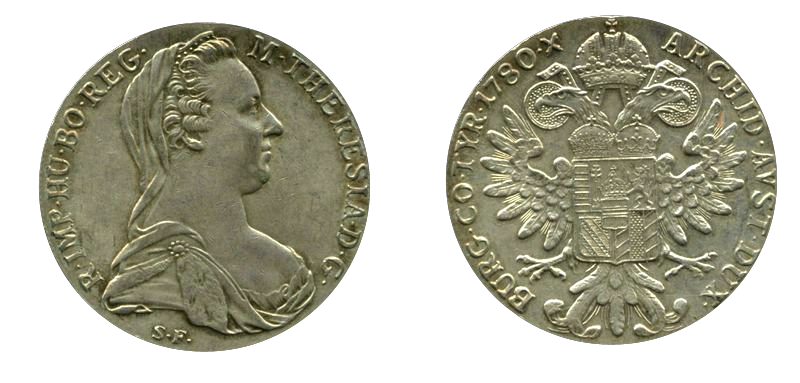
Theresa Thaler coins

German East Africa Rupee
Wednesday, 2 May 2012
THE IRON SNAKE
African seers predicted the coming of an iron snake that would swallow
people and vomit them at designated points.
The British efforts to build a concrete base for its
colonies in East Africa saw the establishment of an infrastructure that has
stood the test of time to acquire the status of a relic and still retain its
functional element. It would suppress slavery by removing the need of
humans to transport goods and necessitate a first word war campaign against
General Von Lettow-Vorbeck’s German East Africa modern Day Tanzania. It allowed
coffee and tea to be farmed and exported by settler farmers, a project that was
highly supported by the UK government and a policy that would shape the development
of Kenya for decades.
It was named after
its eventual destination, Uganda. In 1896 the British East Africa Company begun
building the line from Mombasa eventually reaching Lake Victoria in 1901.The
point was named Port Florence (Modern day Kisumu city),it was named after the
lady who was given the honour to hammer in the last key at the water’s edge,
Florence Preston wife of Chief foreman plate layer, Ronald O.Preston.
The railway would ensure British dominance in East Africa.
It was to run parallel to an earlier piece of infrastrure, an Ox-cart route from Mombasa
to Busia, the Mackinnon-Scalater road and now the modern day Mombasa- Nairobi
highway. Construction was carried out by Indian labourers estimated at around
32000.It cost around 5 m pounds and was operational by 1903.
LOCAL RESISTANCE
Notable was the Kedong massacre, Maasai locals attacked
railway workers killing 500 because two Masaai girls had been raped. English
man Andrew Dick led a counter attack against them but run out of ammunition and
was speared to death. At the turn of the 20th century the Nandi
people were to stage further resistance led by Koitalel Arap Samoei who was later captured and hanged in 1905 ending the resistance.
TSAVO RIVER BRIDGE
By 1898 tha bridge had reached Tsavo River. A temporay
wooden trestle was built to allow continuation of the railway as a permanent,firmer
bridge was being built.The bridge was to be built under direction of
captain,later colonel J H Patterson.The construction was halted for several
months after a scare, the scores labourers –Indian and African were mauled by
two lions. The two felines were later shot by Patterson and their remains are
currently preserved at the Chicago field Museum. The bridge is still in place and
functional.Unmarked graves remain along the lines route at stations along,kyulu, kanga and kenani.
The man eating lions would later kill road Engineer O’Hara
who was drugged from his tent in 1899.Police Superintendent C H Ryall would face the same fate while
sleeping in his observation saloon no.13, he was killed by a lion that entered
his carriage through the window and dragged his body to the bush. Others were to
recount their narrow escapes, Heubnar a German trader and Parenti an Italian
merchant. The lion was to be later bait trapped and shot.
NAIROBI KENYA’S
CAPITAL CITY
By 1899 nearly 500kms of the track had been laid and had
crossed the Athi plains. The rail head
reached a swampy ground called by the locals (Maasai) Nyrobi (later 1900 named
Nairobi modern day capital city of Kenya).Here a major base was set up in
preparation for further penetration of the railway line, the administrative
offices were moved here from Mombasa and staff houses were set up. The colonial
administration also moved to this place from nearby Machakos. These attracted
many support services and goods which were provided by the Indians merchants.
Eventually construction was completed in 1901, opening up
East Africa to the rest of the word with Five million pounds sterling, 43
stations, 1200 bridges, five years and countless lives lost. An amazing feat in
the history of Kenya and railway infrastructure.
US President Theodore Roosevelt while on safari in 1909 road
on the railway line he later remarked:
“ The railroad, the embodiment of the eager, masterful,
materialistic civilization of today, was pushed through a region in which
nature, both as regards wild man and wild beast, does not differ materially
from what it was in Europe in the late Pleistocene.
 The Tsavo Man-Eaters on display in the Field Museum on Natural History in Chicago Illinois...the skins were sold in 1924 to the museum for US$ 5,000

Follow up on the article "Train machines : lunatic express" or get it direct on your E-mail.
Subscribe to:
Posts (Atom)